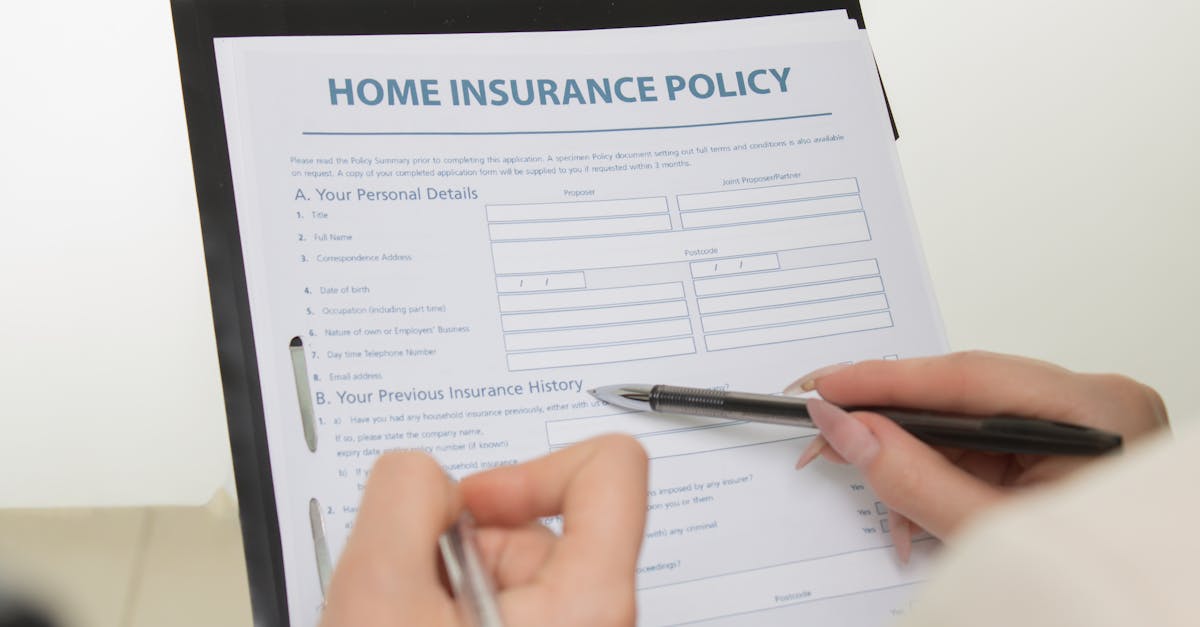
Why Most Budget Home Insurance Policies Fall Short (And The Critical Gaps You Need to Close)
The doorbell rings. It’s Tuesday morning, 9:00 AM, and your perfectly manicured lawn is getting its weekly trim. You’re enjoying a cup of coffee, looking at the spreadsheet for your small business. Suddenly, a tree branch, weakened by last night’s unexpected windstorm, snaps. It crashes through your roof, sending a cascade of shingles, insulation, and splintered wood into your living room, narrowly missing your antique grandfather clock. Panic sets in.
Your first thought, after checking that everyone is safe, is relief: “Thank goodness for home insurance!” But as the days turn into weeks, and you begin the arduous claims process, a chilling reality starts to unfold. The ‘budget-friendly’ policy you painstakingly chose to save a few bucks each month? It’s falling woefully short.
In my years of advising small business owners and families on financial resilience, I’ve seen this scenario play out countless times. People opt for the cheapest home insurance thinking they’re covered, only to discover critical gaps when disaster strikes. They quickly learn that not all policies are created equal, and the ‘savings’ often disappear in the face of unexpected deductibles, coverage limits, and excluded perils. What initially felt like a smart financial move to reduce monthly expenses becomes a significant financial burden, costing them tens of thousands of dollars out of pocket.
This isn’t about shaming anyone for being budget-conscious; it’s about understanding the insidious compromises hidden within seemingly attractive low-cost policies. What truly changed everything for me, and for the clients I’ve guided, was a deep dive into the fine print and a strategic shift toward value-driven coverage rather than just price-driven premiums. It’s about recognizing that your home is likely your largest asset and protecting it adequately is non-negotiable.
Key Takeaways
- Many budget home insurance policies have dangerously low dwelling coverage limits that don’t reflect true rebuilding costs.
- Actual Cash Value (ACV) coverage, often found in cheaper policies, can leave you significantly underinsured compared to Replacement Cost Value (RCV).
- Critical perils like flood and earthquake are almost universally excluded from standard policies and require separate, essential riders.
- Insufficient liability coverage in budget plans exposes you to immense personal financial risk from unforeseen accidents on your property.
- The ‘savings’ from a low premium are often eclipsed by high deductibles and unexpected out-of-pocket expenses during a claim.
The Illusion of Adequate Dwelling Coverage
One of the most common and devastating shortcomings of budget home insurance policies lies in their dwelling coverage. This is the portion of your policy designed to rebuild or repair the physical structure of your home after a covered event. The mistake I see most often is people simply accepting the amount suggested by their insurer or choosing a number based on their home’s purchase price or current market value. This is a critical error. Your dwelling coverage should always be based on the estimated cost to rebuild your home from the ground up in today’s construction market, not what you paid for it or what it would sell for.
Think about it: a market downturn won’t reduce the cost of lumber, skilled labor, or concrete. In fact, after a widespread disaster (like a hurricane or wildfire), local construction costs often skyrocket due to demand, a phenomenon known as demand surge. A budget policy might offer $250,000 in dwelling coverage for a home that would actually cost $400,000 to rebuild today. If a total loss occurs, you’re on the hook for the $150,000 difference, an amount that could cripple most families financially.
In my experience, what changed everything for clients was sitting down with a local builder or appraiser to get a realistic rebuild estimate. This isn’t a one-time exercise; construction costs fluctuate, so review this figure annually. Many insurers offer an extended dwelling replacement cost endorsement, which adds an extra 20-25% coverage beyond your stated limit, specifically to account for unforeseen cost increases or demand surge. It’s a small premium increase for a massive peace of mind, making the difference between rebuilding your life and facing insurmountable debt.
The Trap of Actual Cash Value (ACV) vs. Replacement Cost Value (RCV)
Another subtle but incredibly costly trap in many budget home insurance policies is the difference between Actual Cash Value (ACV) and Replacement Cost Value (RCV) for your personal property. ACV policies are cheaper because they factor in depreciation. If your five-year-old sofa is destroyed in a fire, an ACV policy will pay you what that five-year-old sofa was worth at the time of the fire, not the cost to replace it with a brand new one.
Let me give you a concrete example: I worked with a client whose 10-year-old roof was damaged by hail. They had an ACV policy. The original roof cost $12,000 to install a decade ago. At the time of the claim, the ACV payout was only $4,000, leaving them with an $8,000 gap to replace it, plus their deductible. Had they opted for RCV, the insurer would have paid for a brand-new roof, minus the deductible, drastically reducing their out-of-pocket expense.
The hidden cost here is astronomical. Imagine replacing all your clothing, electronics, furniture, and appliances with brand new items after a significant loss, only to receive a fraction of their current purchase price. What changed everything for me and my clients was recognizing that the slightly higher premium for Replacement Cost Value (RCV) on personal property is an investment in your future financial stability. It ensures that when a loss occurs, you can actually replace your belongings without dipping deep into your savings or going into debt. Always opt for RCV coverage for personal property, even if it means a slightly higher premium.
The Flood and Earthquake Blind Spot
This is perhaps the biggest blind spot, and the one that catches almost everyone off guard: standard homeowners insurance policies do not cover flood or earthquake damage. Let me repeat that: they do not cover flood or earthquake damage. It doesn’t matter if your budget policy costs $500 or $5,000; these perils are universally excluded from typical policies.
I once had a client who lived in a seemingly low-risk area, miles from any major body of water. A sudden, unprecedented downpour overwhelmed the local storm drains, and an inch of water seeped into their finished basement, causing $30,000 in damage. Their standard policy denied the claim. They had assumed ‘water damage’ was covered, not realizing that ‘flood’ (defined as water coming from outside the home) was a separate exclusion. The cost? $30,000 entirely out of pocket, plus the emotional toll of dealing with mold remediation and reconstruction.
Even if you don’t live in a designated flood zone, unexpected weather events are becoming more common. Similarly, seismic activity can occur in areas not traditionally considered earthquake-prone. What changed everything for me was adopting a proactive approach: always assess your specific geographic risks and consider separate flood and/or earthquake insurance. The National Flood Insurance Program (NFIP) offers policies, and many private insurers offer competitive earthquake coverage. Don’t rely on the assumption that a ‘comprehensive’ policy covers everything. These riders are not optional add-ons for many; they are essential safeguards against financially ruinous events.
Inadequate Liability Coverage: A Personal Wealth Risk
Beyond protecting your home’s physical structure and contents, home insurance also provides a critical layer of liability protection. This covers you if someone is injured on your property and you’re found legally responsible, or if you accidentally cause damage to someone else’s property away from home. Budget policies often come with bare-minimum liability limits, typically $100,000 to $300,000.
Imagine a scenario: a guest slips on ice on your walkway, breaks their hip, and requires extensive surgery and rehabilitation. If they sue you for medical expenses, lost wages, and pain and suffering, a $100,000 liability limit will be quickly exhausted. The remaining costs, which could easily run into hundreds of thousands of dollars, would come directly out of your personal assets – your savings, investments, and even future earnings.
The mistake I see most often is people underestimating the true cost of a serious personal injury claim. What changed everything for my clients was understanding that liability coverage should be at least equal to your net worth, if not higher, often through an umbrella policy. An umbrella policy kicks in after your home and auto liability limits are exhausted, providing an additional layer of protection, usually from $1 million to $5 million, for a surprisingly affordable premium. This protects not just your home, but your entire financial future, making it a non-negotiable component of robust financial planning, especially for anyone with significant assets or income.
The High Deductible & Hidden Costs of ‘Cheap’ Premiums
Finally, the most immediate and tangible ‘hidden cost’ of budget home insurance policies often reveals itself at the time of a claim: the deductible. To keep premiums low, many budget policies impose higher deductibles. While a higher deductible can be a smart way to reduce premiums if you have the cash readily available, for many seeking ‘cheap’ insurance, it means they might struggle to cover the initial out-of-pocket expense when a loss occurs.
I had a client with a $2,500 deductible on their budget policy. A small kitchen fire caused $4,000 in smoke damage and minor structural repairs. After the $2,500 deductible, they received only $1,500 from the insurer, leaving them to find the remaining funds for restoration and temporary living expenses. The ‘savings’ on their monthly premium over the years paled in comparison to the immediate financial strain.
What changed everything for me and my clients was a strategic approach to deductibles. Instead of simply picking the highest one to save on premiums, we assess what amount they could comfortably pay out-of-pocket without disrupting their emergency fund or daily life. It’s often better to pay a slightly higher premium for a manageable deductible ($500-$1,000) than to face a crippling $2,500 or $5,000 bill during an already stressful time. Beyond the deductible, be wary of policies with special deductibles for certain perils (like wind/hail or hurricane) which can be a percentage of your dwelling coverage, making them far higher than a standard dollar amount. Always read the fine print and understand exactly what you’re responsible for before a crisis hits.
Frequently Asked Questions
Q: Is it always a bad idea to choose the cheapest home insurance policy available?
A: Not necessarily always, but it’s often a high-risk gamble. The cheapest policies typically cut corners on coverage limits, offer Actual Cash Value instead of Replacement Cost, include high deductibles, and lack crucial endorsements. While the premium might be low, the potential out-of-pocket costs during a claim can be astronomically higher, leading to significant financial distress. It’s better to focus on value and adequate protection rather than just the lowest price.
Q: How can I determine the correct dwelling coverage for my home?
A: The most accurate way is to get an estimate from a local home builder or appraiser for the cost to rebuild your home from scratch in today’s market. Do not use your home’s market value or purchase price. Factors like local labor costs, material prices, and the unique features of your home will all influence this. Review this estimate annually, as construction costs can change significantly.
Q: What’s the biggest difference between Actual Cash Value (ACV) and Replacement Cost Value (RCV) for personal property?
A: ACV pays you the depreciated value of your belongings at the time of loss, meaning you receive less than what it costs to buy a new item. RCV pays the full cost to replace your damaged or destroyed items with new ones of similar kind and quality, without deduction for depreciation. Always opt for RCV for personal property to ensure you can replace your belongings without a significant financial shortfall.
Q: Do I really need separate flood or earthquake insurance if I live in a low-risk area?
A: While the risk may be lower, standard home insurance policies never cover flood or earthquake damage. Unexpected events, like severe rain overwhelming drainage systems or unpredicted seismic activity, can happen anywhere. If you don’t have these separate policies, any damage from these perils will be 100% out of your pocket. It’s prudent to assess your specific risks and consider these essential coverages, regardless of current risk assessments.
Q: How much liability coverage is truly enough for my home insurance?
A: A common recommendation is to have liability coverage equal to or greater than your total net worth. For most people with significant assets, this means aiming for at least $500,000 to $1 million in personal liability coverage on your home policy. For even broader protection, especially if you have substantial assets, an umbrella insurance policy (typically $1 million to $5 million in additional coverage) is highly recommended. It’s an inexpensive way to shield your assets from devastating lawsuits.
The Real Cost of Undervalued Protection
Choosing home insurance solely on price is a classic false economy. While a lower premium might offer immediate gratification, it often comes with a hidden bill that far exceeds any initial savings when you actually need to file a claim. Your home is not just a structure; it’s an investment, a sanctuary, and the foundation of your financial security.
Instead of chasing the cheapest policy, focus on comprehensive, value-driven coverage that truly protects your assets. Understand your dwelling’s true rebuild cost, opt for replacement cost for your personal property, proactively address flood and earthquake risks, ensure robust liability coverage, and select a deductible you can comfortably afford. These strategic decisions aren’t just about insurance; they’re about building true financial resilience and protecting the wealth you’ve worked so hard to accumulate. Don’t wait for disaster to strike to realize the true cost of undervalued protection; take action today to review and fortify your home insurance coverage.
Written by Mark Peterson
Budgeting, debt management & small business finance
With two decades of experience running small businesses, Mark offers practical advice on budgeting, debt management, and entrepreneurial finance.
You Might Also Like

Why Most Beginners Fail at Mastering Credit Card Debt Payoff (And The 'Behavioral Friction' Strategy That Actually Works)
Struggling with credit card debt? Discover why common payoff methods fail and learn a behavioral-friction strategy that truly works.

Why Most Beginners Fail at Personal Financial Forecasting (And The 'Scenario Resilience' Strategy That Actually Works)
Discover why traditional financial forecasting falls short for beginners and learn the 'Scenario Resilience' strategy for accurate wealth planning.

Why Most Beginners Fail at Mastering Their New Electric Car (And The Layered Learning That Actually Works)
Struggling with your new EV? Discover why beginners often miss key details and the layered learning strategy that builds true confidence and efficiency.